
The mining industry is undergoing a massive transformation. As global demand for minerals grows, the pressure to adopt sustainable practices has never been higher. Today, mining companies must find a delicate balance between high-volume extraction and minimizing their ecological footprint. At Alpha Grinding Media, we believe that true sustainability starts with operational efficiency, particularly in the most energy-intensive stages of mineral processing.
The Core Environmental Challenges in Contemporary Mining
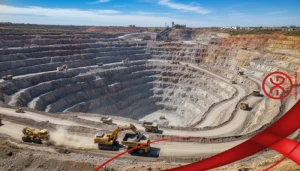
Modern mining operations face complex environmental hurdles that go beyond simple land disturbance. Land degradation and biodiversity loss are significant, but the management of water resources and chemical runoff often poses a greater long-term risk to local ecosystems. To combat this, engineers are implementing closed-loop water systems and advanced containment strategies. These technologies ensure that mining activities do not interfere with the health of surrounding watersheds while maintaining the high output required by global markets.
However, the most pressing environmental concern is energy consumption. Comminution—the process of crushing and grinding—is responsible for a staggering portion of a mine’s total power usage. This high energy demand is a primary contributor to the industry’s carbon emissions. Reducing this footprint requires a shift toward smarter grinding strategies and the use of superior materials that maximize the work done per kilowatt-hour.

The Core Environmental Challenges in Contemporary Mining
Modern mining operations face complex environmental hurdles that go beyond simple land disturbance. Land degradation and biodiversity loss are significant, but the management of water resources and chemical runoff often poses a greater long-term risk to local ecosystems. To combat this, engineers are implementing closed-loop water systems and advanced containment strategies. These technologies ensure that mining activities do not interfere with the health of surrounding watersheds while maintaining the high output required by global markets.
However, the most pressing environmental concern is energy consumption. Comminution—the process of crushing and grinding—is responsible for a staggering portion of a mine’s total power usage. This high energy demand is a primary contributor to the industry’s carbon emissions. Reducing this footprint requires a shift toward smarter grinding strategies and the use of superior materials that maximize the work done per kilowatt-hour.
Reducing Carbon Footprint through Grinding Optimization
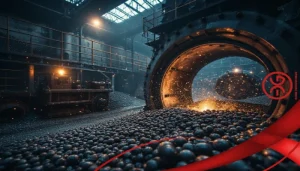
One of the most effective ways to lower carbon emissions is by optimizing the performance of steel balls within the grinding circuit. When low-quality media are used, they tend to deform or break, which leads to inefficient grinding and wasted energy. By choosing premium grinding media, mines can maintain a consistent particle size distribution, which prevents energy-intensive over-grinding and ensures that every rotation of the mill is as productive as possible.
To achieve a more sustainable operation, mining professionals often focus on the following key areas of optimization:
- Media Hardness and Toughness: Matching the hardness of the steel balls to the specific ore type to reduce wear rates.
- Charge Trajectory: Ensuring the balls fall in a pattern that maximizes impact and minimizes wasted heat energy.
- Size Gradation: Using a balanced mix of media sizes to ensure all ore particles are effectively targeted.

Enhancing Efficiency in SAG Mills and Ball Mills
The heavy lifting in mineral processing occurs in SAG mills. These massive units are the primary energy consumers on any mine site. Because the environment inside a SAG mill is so volatile, the durability of the grinding media is paramount. If the media fails prematurely, the mill’s efficiency plummets, leading to a spike in energy costs and a larger environmental impact per ton of processed mineral.
For these high-impact conditions, Forged Steel Grinding Balls are the industry standard for sustainability. Their dense internal structure allows them to withstand the violent collisions inside SAG mills without breaking. This durability not only saves energy but also reduces the total volume of steel consumed annually. When a mine switches to forged media, they are effectively reducing the “embedded carbon” of their operation by requiring fewer replacement shipments and generating less metallic waste.
In secondary stages where finer grinding is required, Cast Grinding Balls offer a different set of environmental benefits. These balls are engineered for extreme abrasion resistance, meaning they stay in the mill longer before wearing down. By strategically choosing between forged and cast options, mining companies can create a highly efficient, “low-waste” grinding circuit that aligns with modern ESG (Environmental, Social, and Governance) standards.

Waste Management and Circular Economy in Mining
Sustainable mining is not just about using less energy; it is also about managing materials responsibly. The concept of a circular economy is becoming vital in mineral processing. Grinding media, unlike chemical reagents, can be part of a sustainable cycle. As steel balls wear down, the metallic content remains part of the process or can be recovered from the tailings, reducing the need for virgin raw materials in other sectors.
Effective waste management in modern mining involves several key strategies:
- Life Cycle Extension: Using high-chromium Cast Grinding Balls to extend the time between media reloads.
- Scrap Reduction: Minimizing the “spalling” of media to ensure that all steel is used for grinding rather than being discarded as fragments.
- Logistics Optimization: Reducing the frequency of deliveries by using longer-lasting media, thereby lowering transport-related emissions.
Water Conservation and Downstream Benefits
Water scarcity is a reality for many mining regions, making conservation a top priority. Efficient grinding media play a surprising role here. When Forged Steel Grinding Balls create a more uniform ore slurry, the downstream dewatering process becomes much more efficient. A slurry with fewer “fines” allows for better water recovery in thickeners and filters, ensuring that more water is recycled back into the mill instead of being lost in tailings ponds.
This synergy between grinding efficiency and water conservation proves that every technical choice has an environmental consequence. By optimizing the primary grinding stage, mines can see a “ripple effect” of sustainability throughout the entire plant, leading to a significant reduction in the total liters of water required per kilogram of mineral produced.

The Economic and Environmental Synergy
For a long time, the industry viewed environmental protection as a cost center. However, modern operations are proving that “green” mining is actually more profitable. Every kilowatt-hour of energy saved by using high-efficiency steel balls is a direct reduction in operating expenses. Similarly, reducing the wear rate of Cast Grinding Balls lowers procurement costs and reduces the labor required for maintenance and reloading.
Alpha Grinding Media is committed to helping mines achieve this double victory of profitability and sustainability. By providing media that is specifically engineered for longevity and impact resistance, we help our partners reduce their environmental footprint while simultaneously improving their bottom line. This alignment of economic and ecological goals is the only way the mining industry can thrive in a carbon-constrained future.
Conclusion
The evolution of modern mining is driven by the need for greater environmental responsibility. From the massive power consumption of SAG mills to the intricate details of water recovery, every aspect of the process is being refined for maximum efficiency. By choosing specialized components like Forged Steel Grinding Balls and Cast Grinding Balls, mining operations can significantly reduce their carbon footprint and waste production.
Sustainability is no longer a distant goal; it is a measurable outcome of smart engineering and high-quality materials. As we continue to provide the industry with the tools it needs, Alpha Grinding Media remains a dedicated partner in building a cleaner, more efficient, and more responsible mining sector for the generations to come.
Conclusion
1. What makes Forged Steel Grinding Balls more eco-friendly?
They are more durable and resistant to breakage. This means less energy is wasted on inefficient grinding and fewer shipments of replacement steel are needed, reducing the overall carbon footprint of the mine.
2. How do SAG mills impact the environment?
SAG mills are the largest energy consumers in a mine. Their efficiency determines the carbon intensity of the entire mineral processing plant, making them a primary target for energy-saving optimizations.
3. Is there a difference in waste between cast and forged media?
Both can be efficient, but Cast Grinding Balls are often better for abrasion resistance in fine grinding, while forged balls are better for high-impact environments. Choosing the right one prevents premature media failure and excessive scrap.
4. Can improving the grinding process really save water?
Yes. Efficient grinding with high-quality steel balls creates a uniform particle size, which makes it much easier for the plant to recover and recycle water from the ore slurry.