The mining industry operates with a specialized vocabulary that can often seem like a foreign language to outsiders. For investors, students, and professionals entering the field, having a reliable Glossary of Mining Terms is not just helpful—it is essential. From the initial geological survey to the final processing of materials, every stage of the mine lifecycle has its own unique set of descriptors.
Whether you are analyzing a feasibility report or walking through a processing plant, having a command of this terminology allows for better decision-making and clearer communication. This article from alpha grinding media serves as your definitive Glossary of Mining Terms, categorized by the various stages of operation including exploration, excavation, underground operations, and milling.
Exploration and Geology Terminology
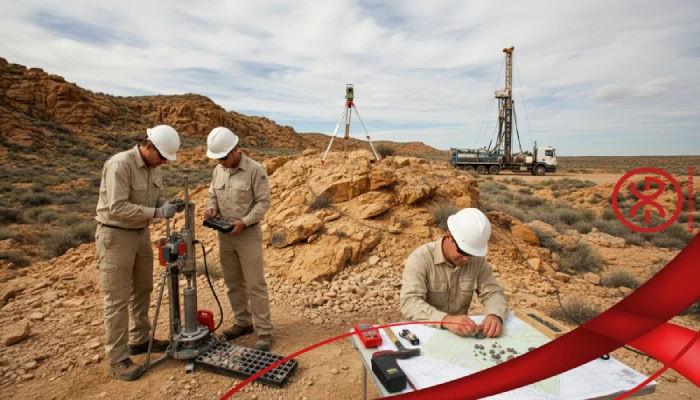
Before a mine can be built, the ground must be understood. The first section of our Glossary of Mining Terms focuses on the language used during the discovery and assessment phases, where geologists determine the potential value of a site.
Assay An assay is a chemical test performed on a sample of ores or minerals to determine the amount of valuable metal it contains. Assays are critical for determining the quality (grade) of a discovery.
Core Sample A cylindrical section of rock taken from the ground using a hollow drill bit. Core samples provide a vertical cross-section of the geological layers, allowing geologists to analyze the rock structure without full excavation.
Deposit A mineral deposit is a concentration of naturally occurring material in or on the Earth’s crust in such form and amount that its economic extraction is feasible.
Lode A mineral deposit consisting of a zone of veins. It is often used interchangeably with “vein,” though a lode typically suggests a larger or more complex system of mineralized rock.
Prospecting The physical search for minerals, fossils, or precious metals. Any complete Glossary of Mining Terms must include prospecting, as it is the very first stage of the mining lifecycle.
Reserve vs. Resource
- Mineral Resource: A concentration of material where quantity and grade are estimated but not yet proven to be legally or economically extractable.
- Mineral Reserve: The economically mineable part of a Measured Resource. It implies that technical studies justify extraction.
General Excavation and Mining Definitions
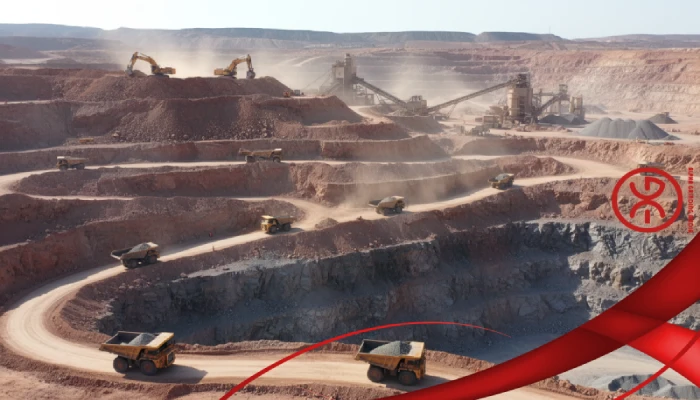
Once a site is deemed viable, the focus shifts to extraction. An essential addition to any Glossary of Mining Terms, this section describes the broad concepts of moving earth and evaluating the material being moved.
Overburden The waste rock, soil, and ecosystem that lies above an ore deposit. In surface mining, the overburden must be removed (stripped) to access the valuable mineral beneath.
Run-of-Mine (ROM) This refers to the raw ore that is mined and delivered to the processing plant. ROM material has not yet been treated, crushed, or graded.
Ore Grade The concentration of a valuable element in a specific volume of rock. Understanding “grade” is vital when consulting a Glossary of Mining Terms, as it directly correlates to the profitability of a project.
Cut-off Grade The minimum grade of ore required for a mineral deposit to be mined economically. Material below this grade is waste; material above it is ore.
Waste Rock Rock that is mined but does not contain minerals in sufficient concentration to be processed profitably.
Surface Mining Definitions
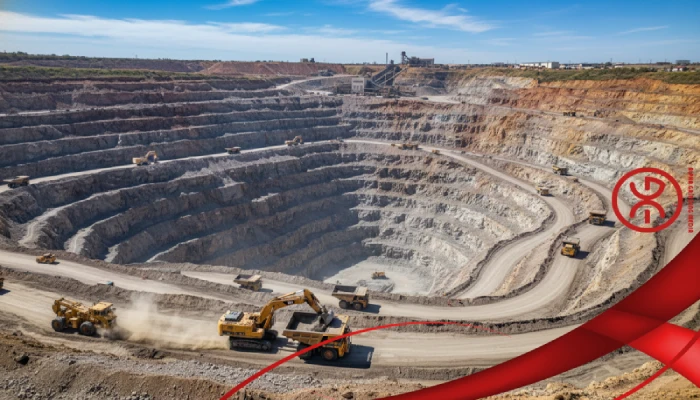
Surface mining is the most common method for extracting minerals located near the earth’s surface. In this section of the Glossary of Mining Terms, we define the geometry and economics of open-pit operations.
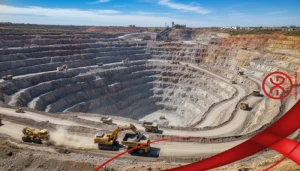
Open Pit A surface mining technique that extracts minerals from an open pit in the ground. It is the preferred method when deposits are close to the surface.
Bench Ledges or steps formed along the sides of an open pit mine. Benches provide access for machinery and act as a safety mechanism.
Strip Ratio A crucial economic indicator in surface mining representing the ratio of waste material to ore. A lower strip ratio is more desirable.
Quarry A type of open-pit mine from which dimension stone, aggregate, sand, or gravel has been excavated.
Highwall The unexcavated face of exposed overburden and ore in a surface mine.
Underground Mining Definitions
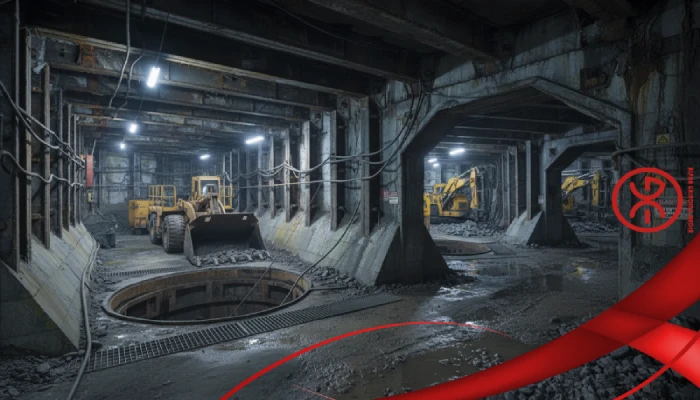
When the ore body is deep, surface mining becomes uneconomical. This section of the Glossary of Mining Terms focuses on the architectural words used to describe tunnels and voids beneath the earth.
Adit A horizontal or nearly horizontal entrance to a mine. Unlike a shaft, an adit goes into the side of a hill or mountain.
Shaft A vertical or inclined excavation serving as a primary access point. Shafts are equipped with hoists to transport miners and ore.
Drift A horizontal tunnel driven along the course of a vein. Drifts are the main “hallways” used to access the ore body.
Stope The open space left behind when ore is extracted. Stoping is the process of extraction, and the stope is the resulting void.
Decline (or Ramp) A spiral tunnel that allows wheeled vehicles to drive from the surface down to the ore body.
Milling and Mineral Processing Terms
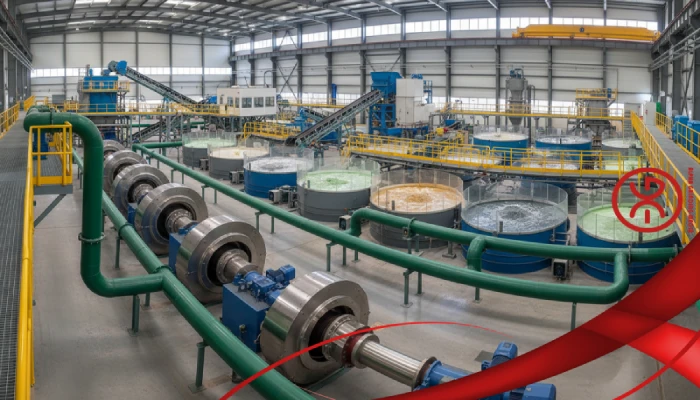
Mining is only half the battle; the rock must be processed. This part of our Glossary of Mining Terms covers the “Milling” aspect—the science of separating valuable minerals from waste.
Comminution The process of reducing the size of solid materials, typically involving crushing and grinding.
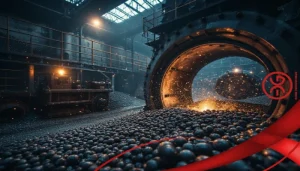
Ball Mill A type of grinder consisting of a rotating cylinder filled with steel balls. It crushes ore into a fine powder.
Flotation A separation process where chemicals make target minerals hydrophobic. Air bubbles attach to the minerals, floating them to the surface as froth.
Leaching A chemical process used to dissolve specific minerals from the ore, such as using cyanide to dissolve gold.
Concentrate The product of the milling process. It is material in which the valuable mineral content has been significantly upgraded.
Tailings The waste material remaining after milling. No Glossary of Mining Terms would be complete without mentioning tailings, as managing this waste is a critical environmental responsibility.
Slurry A semi-liquid mixture of fine solid particles suspended in a liquid (usually water).
Environmental and Reclamation Terms
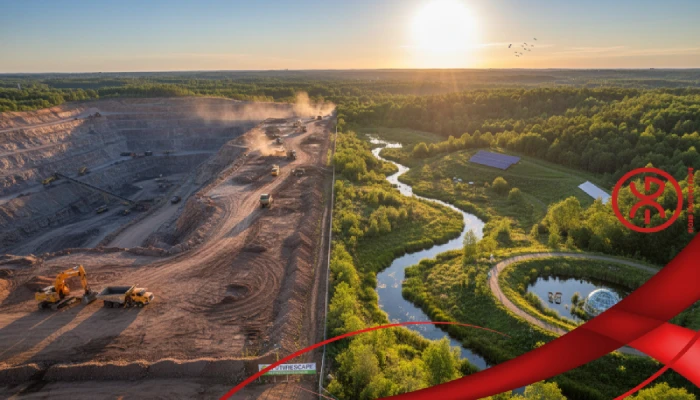
Modern mining is deeply concerned with sustainability. The final section of this Glossary of Mining Terms describes the lifecycle of a mine after the ore is exhausted.
Reclamation The process of restoring land that has been mined to a natural or economically usable state.
Acid Mine Drainage (AMD) The outflow of acidic water from metal mines. Managing AMD is one of the most critical challenges in the industry.
Closure Plan A comprehensive plan detailing how a mine will be closed and rehabilitated.
Conclusion
The mining industry is a complex ecosystem of engineering, geology, and finance. Mastering this Glossary of Mining Terms provides a solid foundation for understanding how resources are discovered, extracted, and processed.
Whether you are looking to invest in a mining company or studying earth sciences, keeping this Glossary of Mining Terms handy will ensure you are never lost in technical jargon. We encourage you to bookmark this page as your go-to reference for navigating the mining world.
Frequently Asked Questions
1. What is the difference between mining and milling?
Mining refers to the extraction of rock from the earth (excavation). Milling refers to the processing of that extracted rock (crushing, grinding, separating) to retrieve the valuable minerals.
2. What does "grade" mean in mining terminology?
In any standard Glossary of Mining Terms, “grade” refers to the concentration or quality of the valuable metal within the ore. High-grade ore is more profitable to extract than low-grade ore.
3. Why are "tailings" considered an environmental concern?
Tailings are the waste leftovers from milling, often containing chemical residues. If not managed correctly in secure dams, they can leak and cause environmental damage.
4. What is the difference between a "resource" and a "reserve"?
A Mineral Resource has potential value but isn’t fully proven. A Mineral Reserve is a resource that is economically and legally ready to be mined.