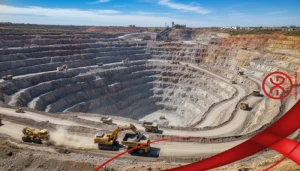
The mining industry, historically reliant on manual labor and traditional techniques, is undergoing a profound transformation. As reserves become more difficult and costly to access, and as environmental regulations tighten, miners are embracing new technologies and strategies to overcome these hurdles. The future of mining isn’t just about digging deeper; it’s about doing so smarter, safer, and more sustainably. This article from alpha grinding media will explore six critical trends that are poised to reshape the mining industry, impacting everything from operational efficiency to environmental responsibility.
Trend 1: Automation and Robotics
One of the most significant shifts in the mining industry is the increasing adoption of automation and robotics. Traditionally, mining operations have been heavily labor-intensive, posing risks to worker safety and limiting operational efficiency. Automation aims to address these challenges by deploying robots and autonomous systems for a variety of tasks.
Autonomous vehicles, equipped with advanced sensors and AI, are being used for hauling ore, transporting personnel, and performing site inspections. Drones are employed for aerial surveying, mapping, and monitoring infrastructure. Remote-controlled equipment allows operators to manage hazardous tasks from a safe distance.
Furthermore, advancements in robotic arms and automated drilling systems are enhancing precision and reducing human error. These technological advancements contribute to improved safety, increased productivity, and reduced operational costs. Companies like Alpha Grinding Media are at the forefront, developing solutions designed to seamlessly integrate with automated grinding processes, ensuring optimal performance and efficiency. By deploying robots and automation, mines can mitigate risks associated with hazardous environments, maintain consistent operations, and optimize resource utilization.
Trend 2: Data Analytics and AI
One of the most significant shifts in the mining industry is the increasing adoption of automation and robotics. Traditionally, mining operations have been heavily labor-intensive, posing risks to worker safety and limiting operational efficiency. Automation aims to address these challenges by deploying robots and autonomous systems for a variety of tasks.
Autonomous vehicles, equipped with advanced sensors and AI, are being used for hauling ore, transporting personnel, and performing site inspections. Drones are employed for aerial surveying, mapping, and monitoring infrastructure. Remote-controlled equipment allows operators to manage hazardous tasks from a safe distance.
Furthermore, advancements in robotic arms and automated drilling systems are enhancing precision and reducing human error. These technological advancements contribute to improved safety, increased productivity, and reduced operational costs. Companies like Alpha Grinding Media are at the forefront, developing solutions designed to seamlessly integrate with automated grinding processes, ensuring optimal performance and efficiency. By deploying robots and automation, mines can mitigate risks associated with hazardous environments, maintain consistent operations, and optimize resource utilization.
Trend 3: Sustainable Mining Practices
In an era of growing environmental awareness, sustainable mining practices are no longer optional but essential. The mining industry has historically faced scrutiny for its environmental impact, including deforestation, water pollution, and habitat destruction. However, the industry is actively seeking ways to minimize its footprint and operate in a more responsible manner.
Water conservation is a major focus, with companies implementing closed-loop water systems and exploring alternative water sources. Waste reduction initiatives aim to minimize tailings (mining waste) and maximize the recovery of valuable materials. Carbon footprint reduction strategies include transitioning to renewable energy sources and optimizing energy consumption.
Innovative technologies, such as bioleaching and in-situ leaching, are also gaining traction as more environmentally friendly alternatives to traditional mining methods. By prioritizing sustainability, mining companies can mitigate environmental risks, enhance their social license to operate, and contribute to a more sustainable future.
Trend 4: Digital Twins and Virtual Reality
The concept of a “digital twin” is gaining momentum in the mining industry. A digital twin is a virtual replica of a physical asset – such as a mine, a piece of equipment, or a process – that is constantly updated with real-time data. This allows mining companies to simulate different scenarios, optimize operations, and predict potential problems before they occur.
Digital twins can be used for process simulation, equipment monitoring, and remote training. They also facilitate better decision-making by providing a comprehensive view of the entire operation.
Virtual reality (VR) is being employed for operator training, allowing workers to practice complex tasks in a safe and realistic environment. VR can also be used for remote site inspections, enabling engineers and managers to assess conditions without physically being on-site. By leveraging digital twins and VR, mining companies can improve operational efficiency, enhance safety, and reduce training costs.
Trend 5: Advanced Materials and Equipment
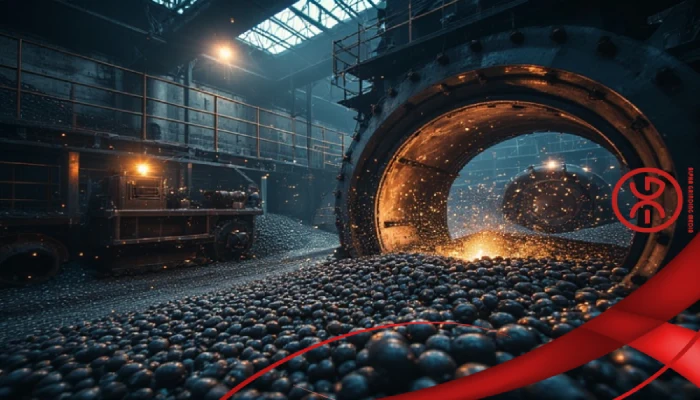
The development of advanced materials is playing a crucial role in enhancing the performance and durability of mining equipment. Forged Steel Grinding Balls and Cast Grinding Balls offer superior wear resistance and grinding efficiency compared to traditional materials.
Steel balls, with their optimized design and composition, are proving to be highly effective in various grinding applications. These advancements translate to reduced downtime, lower maintenance costs, and improved grinding performance.
Furthermore, advancements in materials science are leading to the development of lighter, stronger, and more corrosion-resistant equipment components. These innovations are contributing to improved operational efficiency, reduced environmental impact, and enhanced worker safety.
Trend 6: The Rise of In-Situ Mining
In-situ mining, also known as underground mining, involves extracting minerals without removing the ore from the ground. This technique is particularly suitable for deposits located deep underground or in areas where traditional open-pit mining is not feasible.
In-situ leaching (ISL) involves injecting chemicals into the ore body to dissolve the valuable minerals, which are then pumped to the surface. This method minimizes surface disturbance and reduces environmental impact compared to conventional mining.
In-situ mining offers several advantages, including reduced land disturbance, lower waste generation, and improved safety. It is a promising approach for accessing resources in challenging environments and promoting sustainable mining practices.
Conclusion
The future of mining is being shaped by a convergence of technological advancements, evolving environmental concerns, and increasing demands for efficiency. Automation, data analytics, sustainable practices, digital twins, advanced materials, and in-situ mining represent key trends that will redefine the industry in the years to come.
Mining companies that embrace these innovations will be better positioned to overcome challenges, unlock new opportunities, and contribute to a more sustainable future. Continuous innovation, strategic investment, and a commitment to responsible mining practices are essential for ensuring the long-term viability of the industry and meeting the world’s growing demand for essential resources.
Frequently Asked Questions
How will automation impact jobs in the mining industry?
This is a common concern. While automation will undoubtedly change the nature of work in mining, it’s not necessarily about job elimination. Instead, automation will shift the focus from physically demanding, repetitive tasks to roles requiring technical expertise, data analysis, and system maintenance. Retraining and upskilling programs will be crucial to ensure a smooth transition for the workforce, creating new opportunities in areas like robotics engineering, data science, and process optimization. Moreover, safer working conditions will be achieved with automation which will improve the work environment.
What are the biggest environmental concerns associated with the future of mining, and how are these being addressed?
Key environmental concerns include water usage, waste generation (tailings), carbon emissions, and habitat disruption. Addressing these involves a multi-pronged approach. This includes closed-loop water systems, tailings management strategies focusing on reduction and reuse, transitioning to renewable energy sources, bioleaching and in-situ leaching techniques, and rigorous environmental monitoring programs. Furthermore, companies are increasingly prioritizing biodiversity protection and habitat restoration as part of their operational practices. Sustainable mining is becoming a central theme.
How does AI specifically improve the efficiency of grinding processes?
AI enhances grinding efficiency by optimizing parameters like ball size, grinding media type (such as steel balls or Cast Grinding Balls), and grinding time. AI algorithms analyze data from sensors monitoring the grinding process to identify optimal settings for maximizing ore recovery and minimizing energy consumption. This leads to more consistent grinding performance, reduced wear and tear on equipment, and improved overall throughput. AI also assists in identifying and resolving potential bottlenecks in the grinding circuit.
How will automation impact jobs in the mining industry?
This is a common concern. While automation will undoubtedly change the nature of work in mining, it’s not necessarily about job elimination. Instead, automation will shift the focus from physically demanding, repetitive tasks to roles requiring technical expertise, data analysis, and system maintenance. Retraining and upskilling programs will be crucial to ensure a smooth transition for the workforce, creating new opportunities in areas like robotics engineering, data science, and process optimization. Moreover, safer working conditions will be achieved with automation which will improve the work environment.